Holland Casino CEO: Dutch public sentiment towards gambling is negative, but sector’s black market battle is good news
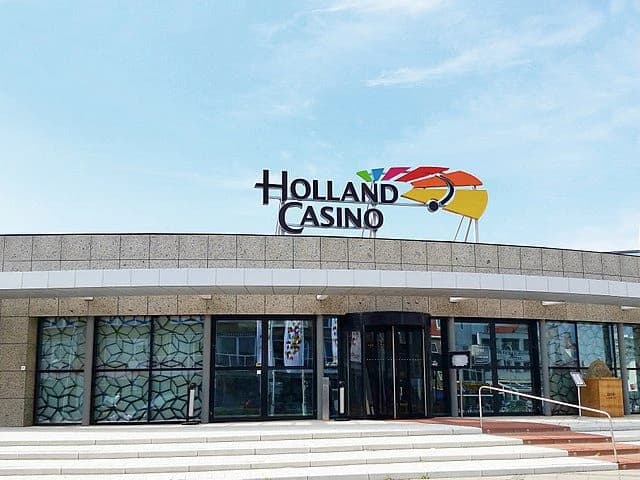
Holland Casino CEO Petra de Ruiter on her journey running a state gambling monopoly through tax hikes and regulatory tightening, and why the Dutch sector teaming up to fight Meta and the black market is a hugely positive move.
One of Europe’s best-known casino operators, Holland Casino runs 13 locations in the country, offering a mix of table games and slots. Amsterdam has two casinos, while the rest are scattered around, with a slight emphasis in the south, near the Netherlands’ border with Germany. The operator has no international locations. Well, it’s a state monopoly, after all. Holland Casino was also one of the first operators to launch online when the market legalised in 2021, with Petra de Ruiter joining the company as CEO the following year. Petra’s journey to the role started in a hotel management school where she learned the ropes of hospitality, followed by a job at Transavia Airlines, a subsidiary of renowned Dutch operator KLM. This led to 24 years in the aviation industry, in a host of different roles: sales, marketing, operations – all aspects of the business that would later become useful in the casino industry. A new challenge By the time Covid came around in 2020, Petra felt she had done enough in aviation and went looking for her next role. As Petra told me, “Holland Casino popped up and I am somebody who by their nature looks at similarities instead of differences. “What I saw is, Holland Casino is a company with 4,000 people working in hospitality, in a strongly regulated market where you have to balance between offering entertainment and a nice evening out with hospitality, and the risk attached to that – and there you see the similarities with the airline industry. She adds: “For example, Transavia also had 4,000 people, cabin crew, cockpit, and more, all very regulated, labour union intensive, people being busy with what can we offer to the guests – but at the same time they have to know their rules and their regulations very well, because it’s important when there’s risk attached. “I had never been a CEO before so I came to it with a kind of Pippi Longstocking attitude – ‘I’ve never done it, but I’m sure I can do it!’” Cross-border custom We mentioned that southern border because German players apparently enjoy the Holland Casino offering too. “German visitors are really interested because we have a different offer from most of the German casinos,” Petra explains. “If you look at our land-based casinos, it’s table games, slots, in some cases bingo, and on some evenings, poker. But there are also restaurants, entertainment. It’s an afternoon or evening out. And as I understand from our German guests, it’s a more entertaining evening or afternoon than in some German casinos.” The company’s offering in the south does not differ markedly from elsewhere in the country, though – the base offering remains the same: “We always have slots, we always have table games like roulette and blackjack, and we always have at least one restaurant, sometimes two.” Casinos in Holland are not limited to a maximum or set number of slots, either – but Petra says the operator is careful not to overwhelm players with too much choice. The Next Zone innovation Variations in the estate seem to largely be down to the size of the property rather than assumptions about customers. In some of the larger casinos, players can enjoy Interblock’s brilliant Stadium setup, where slots and table games combine with a live presenter for an energetic, effervescent casino floor. Holland Casino calls this Next Zone, and as Petra elaborates: “It’s an innovation we made a few years ago to see how we can develop a casino product because I think in the industry, we are very well known for what we have, but how do you innovate?” Like most operators, slots make up the bulk of Holland Casino’s income, but it’s worth remembering that Holland Casino has a monopoly on table games, poker and bingo. “I would say those are also our hero products that make us attractive because in the Netherlands we are the only one offering land based live table games,” says Petra. “Maybe they’re not so dominant in the results, but it is dominant in our identity. But figure-wise, slots are bigger than table games.” Petra’s experience in aviation and education taught her that people are important – losing the human interaction on the casino floor would be a bad idea. Sure, not all customers want to talk, but the success of the Next Zone points to players seeing Holland Casino as a sociable, lively experience rather than a solitary one. A healthy legal market in the Netherlands The Netherlands has been the subject of much industry conversation, particularly the online side of the business. Petra emphasizes the importance of a ‘healthy legal gambling market’ to help the sector thrive. “We see taxes going up, we see regulations going up. You see your guests changing what they want. We have to make sure that we have a good legal offer because if we don’t have that, we also know that people will find their way to illegal means.” Holland Casino celebrates 50 years this year since the Dutch government founded it. Petra says it was very important at the time to provide that activity to local people. “So they decided to found Holland Casino. At that time, they also thought it might be interesting for tourists. That aspect is really gone, we’re really focused on the local market now. But 50 years later, it’s still very relevant to have a good, healthy legal industry.” Tax hikes forces strategic reshuffle, but consumers wouldn’t know it Is the monopoly safe, is it set in the law that it will operate forevermore? No, it’s under constant evaluation, Petra explains: “The Dutch State, represented by the Ministry of Finance, is our shareholder and they evaluate every seven years, not only us as Holland Casino, but all state-owned companies.” One of the operator’s most significant challenges is the increase in gambling tax enforced over recent years. She’s been particuarly vocal about this and the company’s profitability has taken a reasonable hit, since the first rax increase to 34.2% of GGR came into effect on 1 January 2025. Holland Casino now pays 37.8% of GGR to the state, as per the additional increase in 2026, but with labour tax on top the business pays around 52% before they can look at their base running costs. It’s not a small burden by any stretch of the imagination, so it’s heartening to see the business doing well despite the tightening tax burden. Mitigation amid tax and regulatory tightening With such a significant raise in tax, you’d forgive the company for cutting wherever possible, but Petra says they’ve made it work by maximising efficiency, restructuring, and maintaining their offering so the customer doesn’t notice that anything has changed. “We feel that people are always interested in gambling and that we are the party who should offer that in a safe way. [Holland Casino] has been careful to maintain that, but of course our costs rose very quickly, so we restructured at our head office. We have also been looking at innovations in offerings, which we are currently also testing, including a further development of the Next Zone. We’ve also introduced the double zero in roulette, which we didn’t have previously in the Netherlands,” the CEO says. “Obviously, in the gaming industry we don’t have a price tag on our product where you can just change the RTP (return-to-player) and your problem is solved, it doesn’t work like that. Especially not if you take responsible gaming seriously.” No cross-selling between channels Speaking of which, in Holland the casinos must have two databases, one for online players, one for land-based, and keep them very separate – except for when it comes to responsible gambling (RG). A casino can’t use its online offering to promote the land-based side to players, and vice-versa – but the data can all be used together to make sure customers are safe from harm whenever they play with the same operator, online or otherwise. Being a state-owned monopoly is beneficial for RG purposes. You don’t have an employer or shareholders expecting a positive quarterly earnings report four times a year, and as long as the business is self-supporting it can continue to make the best choices for player health and relationships. As Petra defines it: “It’s about a healthy long-term relationship”. Holland Casino has a responsible gambling board, which includes scientists, experts with lived experience, and their own RG executives. They meet with the board every few months to talk over current processes, and the board challenges the operator’s ideas and implementations, pushing them to do better. “They challenge us both from an academic side and a more practical side. We try to develop our rules as we go along but you have to prove every single day that you’re doing all that you need to do on responsible gaming,” Petra notes. iGaming, the elephant in the room The Netherlands online gambling market has been the subject of many column inches and much speculation thanks to regulation that has been largely described as heavy-handed and perhaps a little short-sighted – even by the country’s own regulator. The triumvirate of Netherlands, Germany, and Sweden is often held up as an example of how not to regulate, with all three countries haemorrhaging players to waiting illegal operators. So what is public sentiment like towards operators? “My feeling is that if you look at public sentiment, they don’t see really the difference between online and land-based,” says Petra. “If you look into what they’re saying, they’re primarily talking online. But for the general public, there is no difference [between the channels] in that respect. She believes the sentiment towards gambling among the Dutch public is comparable to the UK, Finland, Germany, France. “So very tense,” she says. Holland Casino has slipped down the ranks However the sentiment towards the Holland Casino brand has remained quite positive, while more generally the sentiment towards gambling is very critical. “People look primarily at the instances where things go wrong for players; of course, every single one of those is one too many. But they don’t tend to look at the large number of people enjoying gambling.” Holland Casino was one of the first operators out of the gate when the newly-minted market opened in 2021, and while they don’t have the position they occupied in those early days, the company’s online offering is healthy. When they launched online, Petra says “we were very well known for – and are very well known for – responsible gaming. “That was the reason why we joined [online as well as land-based]. But we were a full brick-and-mortar company so it took us some time to prepare for that market. In the beginning, the market share was of course higher because you only had 10 operators and we had a very well-known brand name, but now the market is much bigger and you have operators more specialized in sports betting and things like that. We have dropped down a bit.” The illegal market fight The Netherlands has a government that may be a little heavy handed, a regulator that knows this, and a monopolistic operator that’s trying to do its best for the customer. The industry is an active participant in trying to erradicate the growing illegal market. This week, state-lottery operator Nederlandse Loterij took action against the offshore operator behind the brand Skyhills, ordering them to cease serving Dutch players. What else can Netherlands gambling operators do to stop the flow of players offshore? Holland Casino is a member of online gambling trade association VNLOK which represents 90% of the licensed operators, and Petra answers simply: “If we knew the answer, we would try to reach it. “What I do think is that deciding together, not only as operators, but together with politicians and stakeholders, that a legal market is very important to get that done. We’re not there yet, and that’s what we’re saying. “An unregulated market doesn’t become a safe market. People will always gamble, so we have to make sure that we have a strong legal market. And so you also need to give us some room to exist. And of course, we need to be regulated. A regulated market is always better than an illegal market. A fight against Meta She mentions an ongoing lawsuit against Meta, which will she expectd wto very challenging. The VNLOK-filed litigation is seeking to take action against the illegal gambling ads allowed to filter through to consumers across Meta’s various platforms. “There are about 70,000 ads every single month for illegal operators or offerings – and there’s only two or three thousand from the legal market. It’s really unbalanced and they should regulate more. “As a trade organisation we are trying to work together with our regulator because we feel that we have a shared interest of getting a good legal market. And of course we’re talking to politicians to do something about putting illegal operators on notice. I think it is really positive at the moment in the Netherlands that the operators have really teamed up,” Petra continues. Notably, she says competing each other is not important at the moment, as working to fight the black market serves a bigger purpose. Finally, after four years in the hot seat, is Petra still enjoying the job? “Absolutely. It’s challenging, it feels like you’re playing in the Champions League sometimes because a lot is asked of the people in the sector. You’ve got responsible gambling, anti-money laundering, and at the same time you have to offer a fun experience. But it’s nice to be challenged,” she concludes.